Summary
Pigalle: A Quick Overview
What it is: Located at the foot of Montmartre, Pigalle is a historic and highly energetic Parisian neighborhood famous for its rich artistic past, neon-lit streets, and legendary entertainment venues.
Location: It stretches along the border of the 9th and 18th arrondissements, centered around the Boulevard de Clichy and Place Pigalle.
Bohemian & Artistic Roots: Named after the 18th-century sculptor Jean-Baptiste Pigalle, the area became a major artistic hub during the Belle Époque. Legendary artists like Pablo Picasso, Henri de Toulouse-Lautrec, and Vincent van Gogh lived, worked, and found inspiration in its bustling cafés.
Why Tourists Visit: It is home to world-renowned performance spaces and concert halls, most notably the iconic Moulin Rouge cabaret. Over the years, the district has undergone a major revival, now seamlessly blending historic cabarets, specialized vintage musical instrument shops (especially on Rue de Douai), and trendy boutique hotels with a bustling, eclectic nightlife scene.
Discover Pigalle, one of Paris’s most misunderstood neighborhoods. From the Moulin Rouge to live music venues, street art and local cafés — a complete visitor guide.
Pigalle has a reputation. For more than a century, the name has conjured images of cabarets, neon signs, and a certain kind of nocturnal commerce that polite travel guides tend to mention in hushed tones. That reputation is not entirely undeserved — but it tells only a fraction of the story. Today, Pigalle is one of the most interesting and rapidly evolving neighborhoods in Paris, home to the Moulin Rouge, one of the city’s best live music scenes, a thriving café culture, and a community of artists, musicians, and young Parisians who have made it genuinely their own.
Where Is Pigalle in Paris?
Pigalle occupies the border between the 9th and 18th arrondissements, clustered around the Place Pigalle and the Boulevard de Clichy. It sits at the foot of the Montmartre hill, with the white dome of the Sacré-Cœur visible from many points in the neighborhood. To the west it blends into the quieter streets of Blanche and Clichy. To the east it connects with the more residential parts of the 9th arrondissement.
The neighborhood is easily reached by metro:
- Line 2: Pigalle, Blanche, Place de Clichy
- Line 12: Pigalle, Abbesses (for upper Montmartre)
A Brief History of Pigalle
The Village at the Foot of the Butte
Before Haussmann’s transformation of Paris, the area around the foot of the Montmartre hill was a collection of windmills, market gardens, and modest dwellings. The neighborhood takes its name from the sculptor Jean-Baptiste Pigalle, one of the most celebrated French artists of the 18th century, whose work can be seen in the Louvre and in churches across Paris.
The Belle Époque and the Birth of the Cabaret
Pigalle’s transformation into an entertainment district accelerated dramatically in the second half of the 19th century. As Paris grew and the working-class populations of Montmartre expanded, the foot of the hill became a natural gathering point for cafés, dance halls, and popular entertainment. The opening of the Moulin Rouge in 1889 crystallized the neighborhood’s identity as the capital of Parisian nightlife — a reputation that would endure for well over a century.
The 20th Century
Through the 20th century, Pigalle evolved and contracted. The grand cabarets gave way to smaller venues and, from the 1960s onward, to the sex shops and adult entertainment establishments that gave the area its more tawdry reputation. At its lowest point, the Boulevard de Clichy was lined almost entirely with adult shops, peep shows, and strip clubs.
The SoPi Renaissance
From the 2000s onward, and accelerating through the 2010s, the area immediately south of Pigalle — nicknamed SoPi, for South Pigalle — began a significant transformation. Independent cafés, natural wine bars, record shops, and restaurants moved into the streets of the 9th arrondissement just below the boulevard, attracting a younger, creative crowd. The transformation has been striking without being complete — Pigalle retains its edge, its history, and its refusal to be entirely gentrified.
What to See and Do in Pigalle
The Moulin Rouge
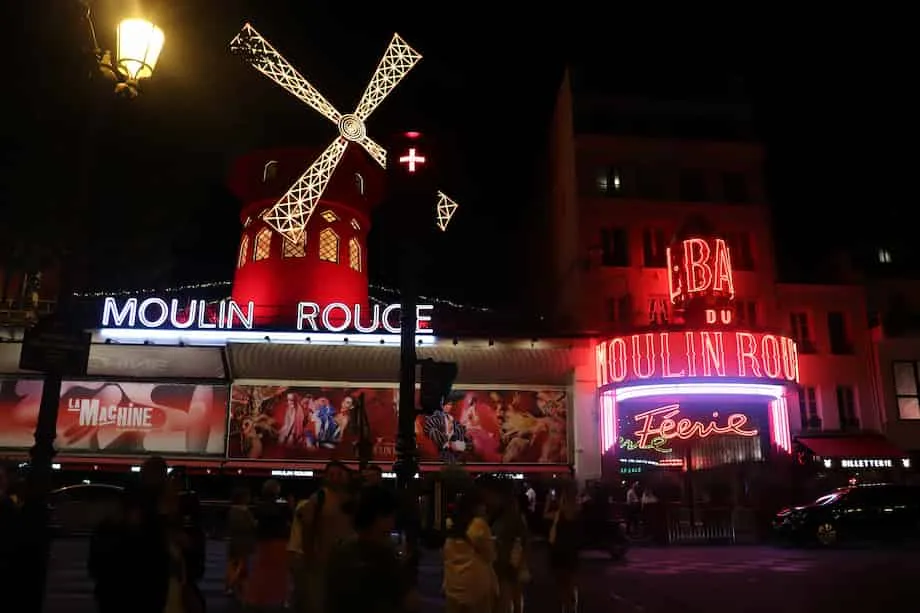
The Moulin Rouge needs little introduction. Opened in 1889 at the foot of the Montmartre hill, it is the most famous cabaret in the world and the birthplace of the modern can-can. Its red windmill is one of the most recognisable silhouettes in Paris. Today the Moulin Rouge continues to operate as a dinner cabaret, offering nightly shows that mix dance, acrobatics, and spectacular staging in a tradition that stretches back over 130 years.
The shows are expensive but genuinely impressive in scale and execution. Booking in advance is essential, particularly for weekend performances. Even if you do not attend a show, the exterior of the building on the Boulevard de Clichy is worth seeing — particularly at night when the red mill is illuminated.
The Musée de la Vie Romantique
Tucked into a quiet street just south of Pigalle, the Musée de la Vie Romantique is one of the most charming small museums in Paris. Housed in the former studio of the painter Ary Scheffer, it evokes the artistic and literary world of 19th-century Paris through paintings, furniture, and personal objects. The museum has a strong connection to the writer George Sand, and its garden café is one of the loveliest hidden terraces in the city. Admission to the permanent collection is free.
The Live Music Scene
Pigalle and the surrounding streets are home to one of the best concentrations of live music venues in Paris. The area has a particular strength in rock, jazz, and blues, with venues ranging from intimate basement clubs to mid-sized concert halls. The rue de Douai, just south of the boulevard, was historically known as the street of music shops — guitar makers, instrument dealers, and rehearsal studios — and retains some of that character today.
H3: The Boulevard de Clichy
The Boulevard de Clichy is Pigalle’s main artery — long, wide, and perpetually busy. Walking its length from Place de Clichy to Place Pigalle gives a complete picture of the neighborhood’s contradictions: adult shops alongside family restaurants, tourists alongside locals, neon signs above elegant Haussmann façades. It is not a boulevard designed to be picturesque, but it is endlessly interesting.
SoPi — South Pigalle
The streets south of the boulevard — particularly Rue Notre-Dame de Lorette, Rue Henri Monnier, and Rue des Martyrs — form the SoPi district, one of the most pleasant areas for café-hopping and restaurant exploration in the 9th arrondissement. This is where young Parisians come to brunch, work from laptop cafés, and spend long evenings over natural wine. The atmosphere is relaxed, the food is good, and the crowds are entirely local.
Rue des Martyrs
Running south from Pigalle toward Notre-Dame de Lorette, the Rue des Martyrs is one of the finest food streets in Paris. Cheese shops, bakeries, fishmongers, chocolatiers, and wine merchants line both sides of the street in a concentration that rewards slow exploration. Saturday morning is the best time to visit, when the street is at its most animated.
Where to Eat and Drink in Pigalle
Pigalle and SoPi have developed one of the strongest restaurant and bar scenes in Paris over the past decade.
| Type | What to Look For |
|---|---|
| Breakfast and brunch | Specialty coffee shops on Rue Henri Monnier |
| Natural wine bars | Relaxed evenings in SoPi streets |
| French bistro | Traditional lunch menus on side streets |
| Food shopping | Rue des Martyrs for cheese, bread, charcuterie |
| Late night | Bars around Place Pigalle until late |
The neighborhood rewards wandering rather than planning. The best discoveries in Pigalle are usually accidental.
Pigalle and Montmartre — How They Connect
Pigalle sits at the foot of the Montmartre hill, and the two neighborhoods are deeply connected historically and geographically. The artists who lived on the Butte came down to Pigalle for their entertainment. The cabarets that made Pigalle famous were fuelled by the creative energy of Montmartre above.
Today the connection remains practical as well as historical. Visitors combining both neighborhoods in a single day typically start in Pigalle in the morning — coffee on Rue des Martyrs, a visit to the Musée de la Vie Romantique — before climbing to Montmartre for the afternoon. The walk up the hill from Place Pigalle to the Sacré-Cœur takes about fifteen minutes on foot.
Practical Visitor Information
Getting There
- Metro line 2: Pigalle or Blanche stations
- Metro line 12: Pigalle station
- Metro line 2: Place de Clichy (western edge of the neighborhood)
Best Time to Visit Pigalle works
at almost any hour but has distinct characters at different times of day. Morning is best for Rue des Martyrs and the café scene. Afternoon suits the Musée de la Vie Romantique and a walk through SoPi. Evening is when the neighborhood comes fully alive — the Moulin Rouge lights up, the bars fill, and the boulevard takes on its most theatrical character.
Is Pigalle Safe?
Pigalle is safe for visitors exercising normal urban awareness. The area around the Place Pigalle can feel chaotic at night, and as in any busy entertainment district, awareness of your surroundings and belongings is sensible. The SoPi streets to the south are entirely relaxed at all hours.
Frequently Asked Questions
What is Pigalle known for in Paris?
Pigalle is best known for the Moulin Rouge cabaret, its historic reputation as an entertainment and red-light district, and more recently for the SoPi neighborhood — one of the most vibrant café and restaurant areas in Paris.
Is the Moulin Rouge worth visiting?
The Moulin Rouge show is a genuine spectacle with high production values. It is expensive and very touristy, but for a one-off experience of Parisian cabaret tradition it delivers. Booking well in advance is essential.
What is SoPi?
SoPi stands for South Pigalle — the streets of the 9th arrondissement immediately south of the Boulevard de Clichy. Over the past decade it has developed into one of the most fashionable and pleasant neighborhood dining and café areas in Paris.
Is Pigalle good for food?
Yes, particularly in the SoPi area and along the Rue des Martyrs, which is one of the best food shopping streets in Paris. The neighborhood has a strong concentration of independent restaurants, wine bars, and specialty food shops.
How far is Pigalle from Montmartre?
The Place Pigalle is at the foot of the Montmartre hill. The walk to the Sacré-Cœur takes approximately 15 minutes on foot. The two neighborhoods are natural companions for a day of exploration in northern Paris.
What is the Musée de la Vie Romantique?
A small, charming museum in a former artist’s studio just south of Pigalle, dedicated to the Romantic period in French art and literature. Entry to the permanent collection is free and the garden café is one of the nicest hidden terraces in the 9th arrondissement.
Pigalle will never be entirely respectable, and that is precisely what makes it interesting. It is a neighborhood that has absorbed over a century of contradictions — art and commerce, glamour and grit, tourists and locals — without losing its essential character. Come for the Moulin Rouge if you must, but stay for the coffee, the music, and the streets that refuse to be anything other than themselves.
Internal Links
Musée de la Vie RomantiqueMusée de la Vie Romantique – Paris Romantic Era Museum